


-
Guide to Buying the Best Mountaineering Ice Axe for Beginners and an Overview of Federation Courses
A specialized review of mountaineering ice axe types (basic and technical) for beginners, tailored to the needs of trekking programs and Mountaineering Federation training courses.
Choosing the right gear when starting your mountaineering and ice climbing journey has a direct impact on safety, learning proper technique, and saving money. The mountaineering ice axe is one of the most vital tools for winter ascents; however, the variety of models on the market often confuses beginner climbers. For a more detailed look at ice axe construction, we recommend reading the article Equipment Selection and Mountaineering Ice Axe Buying Guide.
1. Types of Ascents and the Needs of Beginner Climbers
Beginner and novice climbers typically start their activity with the following programs:
- ✔ Snow treks and general winter ascents: Summiting via normal, low-angle routes that require using the axe as a support, self-arrest technique, and step-kicking.
- ✔ Crossing low-angle natural glaciers: Traversing glacial routes where maintaining balance and self-belay are the top priority.
- ✔ Participating in official training courses: Completing basic courses to learn the principles of self-belay and snow self-arrest.
2. Suitable Ice Axes for Mountaineering Federation Training Courses
For choosing an ice axe to take part in Mountaineering Federation courses, the following is recommended based on the federation's training syllabus:
- ? Basic Snow and Ice Training Course: This course focuses on teaching step-kicking, self-arrest technique at various angles, and ascending/descending moderate snow slopes. At this stage, using a **Basic (Basic / Type 1) ice axe** with a straight or very gently curved shaft is mandatory. Sharply curved technical axes are not suitable for this course, as they lack the standard rigidity needed for self-arrest on snow and have a shorter shaft.
- ? Advanced Snow and Ice Training Course: As climbers move into topics such as ice wall climbing, placing ice protection, building anchors, and vertical ascents, they need **Technical (Technical / Type 2) ice axes** or technical ice tools, which have a curved shaft, ergonomic grip, and higher pick strength.
3. Introducing Classic and Basic ICT Ice Axes for Beginners
The ICT (International Climb Technology) brand, using advanced metallurgy and technical standards, has designed a variety of models for different climbing levels. The recommended models for beginners and training-course students are:
-
1. ICT Basic Light Climb Ice Axe (Light Climb):
An exceptionally lightweight, ergonomic, and standard-compliant choice for snow treks, general ascents, and the basic snow training course. Its shaft and pick material is designed to provide maximum safety during emergency self-arrests. -
2. ICT Basic Harmony Ice Axe (Harmony):
A modern, well-balanced model with excellent weight distribution for long treks and winter ascents. With its standard ergonomics, this axe delivers exceptional balance when planting the axe and step-kicking on snow. It also features a cold-insulated shaft and is the only basic ice axe in the world with an interchangeable pick. -
3. ICT Technical Protector Ice Axe (Protector):
A semi-technical, highly durable ice axe for climbers who, after completing the basic course, plan to move on to more serious ascents, steeper slopes, and the advanced training course. The curved shaft and pick design of this model perform excellently on ice and compacted snow.
Other technical ice axes worth mentioning include:
Blizzard mountaineering ice axe
Protector+ mountaineering ice axe
Protector mountaineering ice axe
Blizzard+ mountaineering ice axe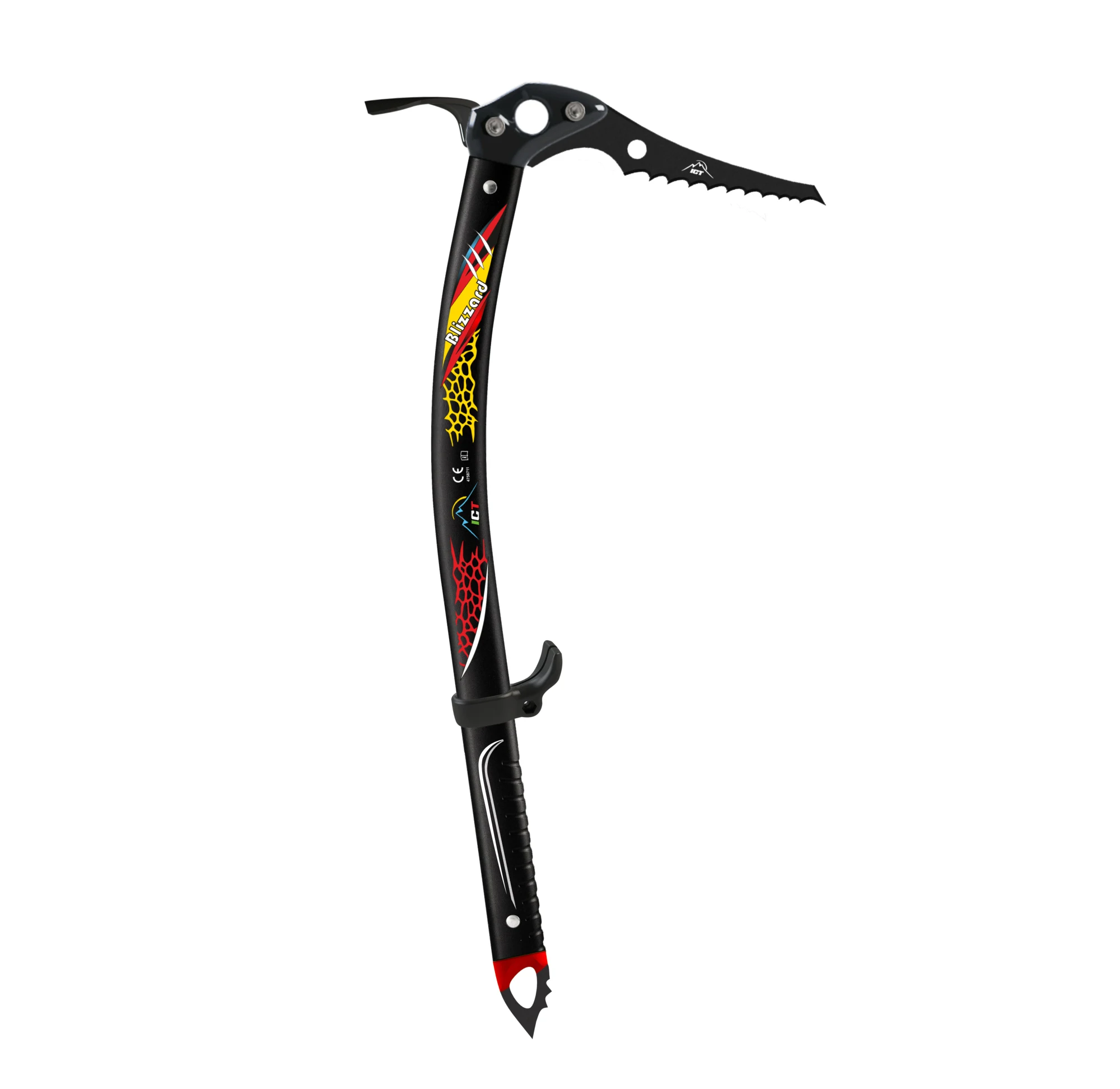


Summary
If you are just starting out in mountaineering, begin with a standard basic ice axe such as the Light Climb or Harmony model, to properly learn the fundamental techniques. To view full specifications, sizing, and technical details of the products, you can visit the ICT Mountaineering Ice Axes page.
